
Best Golf Grips for Arthritis
The right grip reduces joint stress, absorbs vibration, and lets you hold the club with less effort, so you can focus on the game, not the pain.
Arthritis makes holding a golf club painful, but the right grip can make a significant difference. Standard grips require more squeezing force than necessary, which puts direct pressure on inflamed joints and makes rounds increasingly uncomfortable. The right grip does two things: it reduces the effort required to hold the club securely, and it absorbs the vibration that travels through the shaft at impact. Both matter when your hands are the problem.
This guide covers the best golf grips for arthritis: what to look for, which options deliver the most relief, and how to choose the right one for your situation. If age rather than joint pain is your main concern, see our dedicated best golf grips for seniors guide. For a full overview of the top grips across every category, see our best golf grips guide.
Quick Picks: Best Golf Grips for Arthritis
| Pick | Grip |
Shock Absorption |
Best For |
| 🏆 Best Overall |
High-tack wrap, minimal grip pressure |
⭐⭐⭐⭐⭐ | Joint pain, reduced grip pressure |
| 🌟 Best All-Weather Option |
Wedge Guys Diamond Hybrid Grips Cushioned lower hand, moisture control |
⭐⭐⭐⭐⭐ | All-weather comfort and control |
| 🎖️ Best Established Brand |
Golf Pride CP2 Pro Dual-density rubber, vibration absorption |
⭐⭐⭐⭐ | Brand-loyal senior golfers |
| 🤲 Softest Option |
Winn Dri-Tac Polymer compound, extremely soft |
⭐⭐⭐⭐⭐ | Maximum softness, dry conditions |
| 👋 Best Oversized Option |
JumboMax JMX UltraLite Jumbo / XL, minimal finger pressure |
⭐⭐⭐⭐⭐ | Finger joint pain, grip tension |
| 💰 Best Budget Option |
Karma Arthritic Jumbo Purpose-built jumbo, affordable |
⭐⭐⭐⭐ | Joint-sensitive, value pick |
How Arthritis Affects Your Golf Grip
Arthritis causes inflammation and stiffness in the joints of the fingers, thumb, and wrist. When those joints are inflamed, any sustained pressure, including the kind required to hold a golf club, aggravates them. Standard grips demand a consistent squeezing force that healthy hands handle without thinking. For arthritic hands, that same force becomes a source of pain that builds over 18 holes.
The instinct most golfers develop is to grip tighter to compensate for the discomfort, which is exactly the wrong response. More pressure means more joint stress, more pain, and more fatigue by the back nine.
There's also the impact vibration factor. Every time the club makes contact with the ball, vibration travels up the shaft and into the hands. A well-cushioned grip absorbs a significant portion of that vibration before it reaches the joints.
The right grip addresses both problems: it reduces the pressure required to hold the club, and it absorbs vibration at impact. Those two things together make golf significantly more manageable for golfers with arthritis.
What to Look for in a Golf Grip if You Have Arthritis
Not every soft grip is right for arthritic hands. Here are the characteristics that matter most, and what each one actually means in practice.
Soft and cushioned grips are grips that use rubber or polymer materials designed to absorb vibration and reduce pressure on the hands and joints. They require less squeezing force to feel secure and are the most important starting point for golfers with arthritis.
Wrap grips are grips that feature a continuous spiral wrap of soft, tacky material around the grip core. The tacky surface holds onto the hand naturally without requiring a tight squeeze, which directly reduces the stress placed on inflamed finger and knuckle joints.
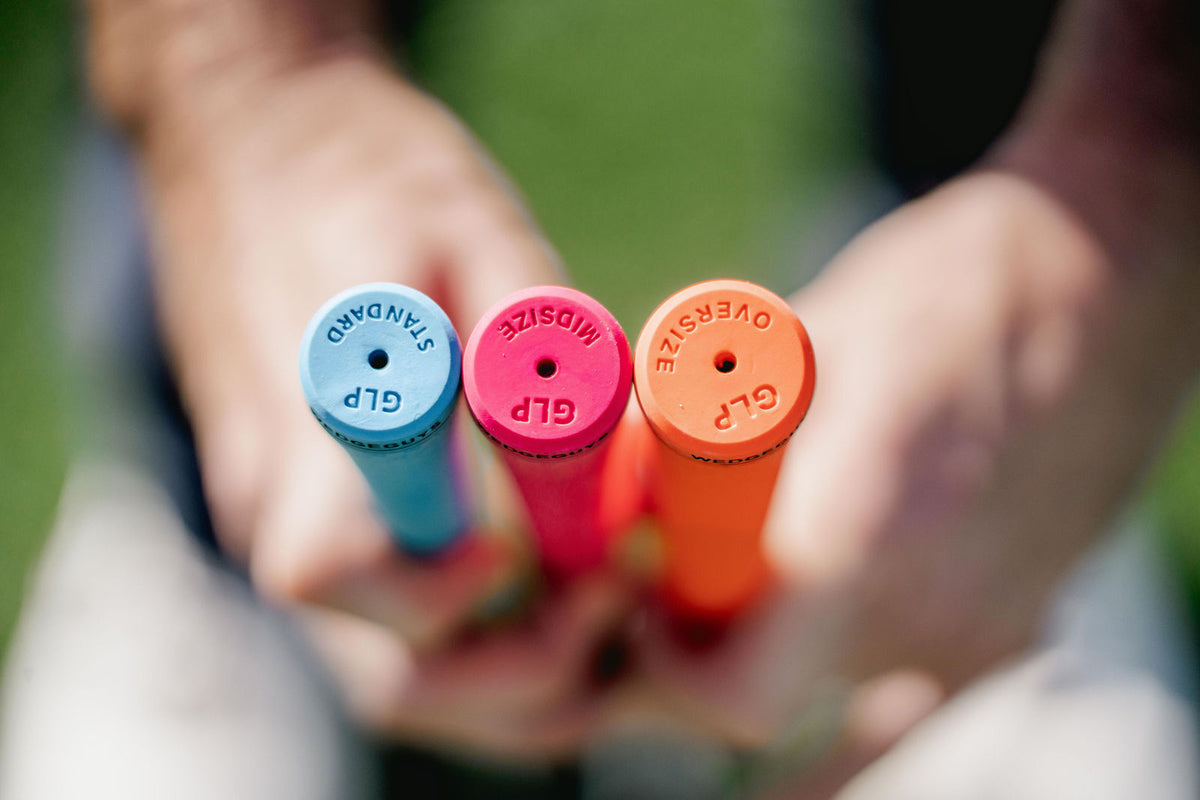
Oversized grips are grips that are larger in diameter than standard, filling more of the hand and requiring less finger pressure to hold the club securely. Reducing finger curl reduces the load on the knuckle and finger joints, which is one of the most direct mechanical benefits available to golfers with arthritis.
Shock-absorbing grips are grips that use dense rubber or polymer compounds to dampen the vibration that travels through the shaft at impact. For golfers with arthritis, this vibration can cause significant discomfort, particularly on mishits where the vibration is more pronounced.
The Best Golf Grips for Arthritis: Full Breakdown
Wedge Guys React+ Grips 🏆 Best Overall

What it does well: React+Grips is a rubber wrap grip built around a DuoWrap side texture, a concave upper traction pattern, and an integrated TrueTrack alignment ridge. The tacky wrap surface holds onto the hand with less squeezing required to stay secure - the core benefit for arthritic golfers, since less squeezing means less joint stress over a round. The alignment ridge also promotes consistent hand placement, which cuts down on mid-round readjusting, a common source of extra grip pressure.
Where it's a step down from premium options: as a wrap-style grip, it wears faster than rubber alternatives in high-use or wet conditions - the standard trade-off for this grip category.
Best for: golfers managing arthritis or chronic hand pain who want a tacky wrap feel with reliable hand placement.
Comes as a complete regripping kit with grip tape, solvent, and video tutorials included.
Wedge Guys Diamond Hybrid Grips Best All-Weather Option

What it does well: The lower hand combines Feel Tack rubber and Diamond Pebble texture for a soft, cushioned feel that's easy to hold with minimal pressure. The upper hand adds cord material and the same Diamond Pebble pattern for traction and stability, so the club doesn't slip or twist without you needing to grip harder to compensate. The moisture-wicking construction matters specifically for arthritic golfers, since a grip that holds on in humid or wet conditions means you're never forced to squeeze harder just to stay in control.
Where it's a step down from premium options: The firmer upper-hand cord section isn't as universally soft as a full wrap grip like the React + Grips.
Best for: Golfers with arthritis who also play in varying weather and want one grip that handles both.
A complete regripping kit is included.
Golf Pride CP2 Pro Best Established Brand for Arthritis

The CP2 Pro is Golf Pride's most arthritis-appropriate model, specifically engineered for comfort and reduced grip pressure rather than tour-level feedback. It uses a dual-density rubber construction that absorbs vibration effectively, making it one of the better shock absorption options in the Golf Pride range.
Available from standard through jumbo sizing, which gives arthritic golfers the option to move up in diameter as needed. The softer lower hand section reduces squeezing pressure and fatigue over a full round. It has a strong following among older and joint-sensitive golfers who want a trusted major brand name.
The CP2 Pro sits at a mid-to-premium price point. For everyday golfers, the Wedge Guys React+ Grips deliver comparable softness with a more naturally tacky surface — meaning even less grip pressure required, at a better price, with a full regripping kit included.
Winn Dri-Tac Softest Feel for Arthritis

The Winn Dri-Tac is the softest mainstream grip available and one of the better shock-absorbing options on this list. The polymer compound construction feels genuinely cushioned in the hand and requires less squeezing pressure than any comparable rubber grip.
The trade-off is durability and wet-weather performance. Polymer grips wear faster than rubber or wrap alternatives, and they become less effective in wet conditions over time. Best suited for golfers who play in dry conditions and prioritize comfort above everything else.
JumboMax JMX UltraLite Best Oversized Option for Arthritis

The JMX UltraLite is the standout choice for golfers whose arthritis is primarily in the fingers and knuckles. The significantly larger diameter fills more of the hand, which reduces the finger curl required to hold the club. Less finger curl means less pressure on the exact joints most commonly affected by arthritis.
Despite its size, the UltraLite is lighter than most standard grips, keeping overall club weight in check. Shock absorption is excellent. The adjustment period is the only negative side. Playing oversized grips for the first time takes a few rounds to get used to, but for the right golfer, the reduction in finger joint stress is meaningful and immediate.
Karma Arthritic Jumbo Best Budget Option

The Karma Arthritic Jumbo is one of the few grips on the market purpose-built with arthritic golfers in mind. Jumbo sizing by design, soft rubber construction, and decent shock absorption. It covers the basics at a price point that makes regripping a full set very accessible.
It won't match the feel or tackiness of the Wedge Guys React+ Grips, and the long-term durability is below average. But as a starting point for golfers who want to try a purpose-built arthritic grip before committing to a premium option, it's a reasonable budget pick.
Does Grip Size Help with Arthritis?
Yes, grip size is one of the most impactful changes an arthritic golfer can make, and it's one of the most overlooked. A larger grip fills more of the hand, which means the fingers don't need to curl as tightly to maintain control. Less finger curl means less pressure on the knuckle and finger joints.
Most arthritic golfers benefit from at least a midsize grip. Those with significant finger joint involvement often find jumbo sizing the most comfortable option. Standard grips are rarely the right choice for golfers with active arthritis, as they require more finger pressure than necessary and offer no joint protection benefit.
Other Ways to Make Golf Easier with Arthritis
Choosing the right grip is the foundation, but a few additional habits make a real difference on the course:
- Choose midsize or jumbo sizing; reducing finger curl is one of the most direct ways to protect arthritic joints.
- Regrip regularly; worn grips lose tackiness and require more squeezing force, which worsens joint stress.
- Warm up your hands before the round; light stretching and gentle movement reduce stiffness before the first tee.
- Use a thin, flexible glove; bulky gloves add resistance and can increase grip pressure on sensitive joints.
- Consider an overlap or interlock grip instead of a ten-finger grip; it distributes grip pressure more evenly across the hand.
- Play in warmer conditions where possible; cold stiffens joints and makes grip pain significantly worse.
Frequently Asked Questions
What are the best golf grips for arthritis?
The best golf grips for arthritis are soft, wrap-style, or oversized grips that reduce the squeezing pressure required to hold the club and absorb vibration at impact. The Wedge Guys React+ Grips is the top pick - the tacky DuoWrap surface holds onto the hand naturally without requiring a tight grip, which directly reduces stress on inflamed joints. For golfers who also play in variable weather, the Diamond Hybrid Grips offer cushioned comfort with all-weather moisture control.
Do larger grips help with arthritis?
Yes. Larger grips reduce the finger curl required to hold the club securely, which decreases the load on the knuckle and finger joints. Most golfers with arthritis benefit from at least a midsize grip. Those with significant finger joint involvement often find jumbo sizing the most comfortable option as it fills the hand more completely and requires the least finger pressure to hold securely.
What grip size is best for arthritic hands?
Midsize or jumbo is best for most golfers with arthritic hands. A midsize grip is approximately 1/16 inch larger than standard and is a good starting point. Jumbo grips are 1/8 inch or more larger and are recommended for golfers with significant arthritis in the fingers or knuckles, where reducing finger curl is the priority.
Can golf make arthritis worse?
Golf itself does not necessarily worsen arthritis, but gripping a club with too much pressure, especially with a worn or poorly fitted grip, can aggravate inflamed joints. Choosing a softer, larger grip that requires less squeezing force is one of the most practical ways to keep playing comfortably without increasing joint stress.
How often should I regrip if I have arthritis?
Golfers with arthritis should regrip at least once a year or every 40 rounds. Worn grips lose tackiness and require more squeezing force to feel secure, which directly increases joint stress. Keeping grips fresh is a simple and often overlooked way to reduce hand pain on the course throughout the season.
Final Verdict: Best Golf Grip for Arthritis
For most golfers with arthritis, the Wedge Guys React+ Grips is the clear first choice. The tacky DuoWrap construction holds onto the hand naturally, minimal squeezing required, and the TrueTrack ridge keeps your hand placement consistent shot after shot.
If you play in variable conditions and need a grip that handles moisture alongside joint comfort, the Diamond Hybrid Grips are the smarter pick. Cushioned lower hand, moisture-wicking construction, and all-weather performance in one package.
If you prefer a well-known major brand, the Golf Pride CP2 Pro is the right model. It is built for comfort and reduced grip pressure, with solid shock absorption and jumbo sizing available.
Whatever you choose, the right grip won't eliminate arthritis, but it will make every round more comfortable and every shot more controlled.
Leave a comment
This site is protected by hCaptcha and the hCaptcha Privacy Policy and Terms of Service apply.