
Cord vs Rubber Golf Grips: Which One Is Right for Your Game?
Cord or rubber- it's one of the most common grip decisions golfers face, and the answer isn't the same for everyone. The right choice depends on how you play, where you play, and what you want to feel in your hands on every swing.
This guide breaks down exactly what separates cord and rubber grips, when to choose one over the other, and which specific grips to consider for each.
And for a full overview of the best golf grips across all categories, see our best golf grips guide.
Quick Overview
|
Cord Grips |
Rubber Grips |
|
|
Feel |
Firm, responsive |
Soft, comfortable |
|
Traction |
⭐⭐⭐⭐⭐ |
⭐⭐⭐ |
|
Wet weather performance |
⭐⭐⭐⭐⭐ |
⭐⭐⭐ |
|
Comfort |
⭐⭐⭐ |
⭐⭐⭐⭐⭐ |
|
Durability |
⭐⭐⭐⭐⭐ |
⭐⭐⭐⭐ |
|
Best for |
Sweaty hands, wet weather, strong grip |
Comfort, beginners, dry conditions |
|
Wedge Guys options |
GLP Cord, Diamond Cord |
GLP Velvet, React+ |
What Are Cord Golf Grips?
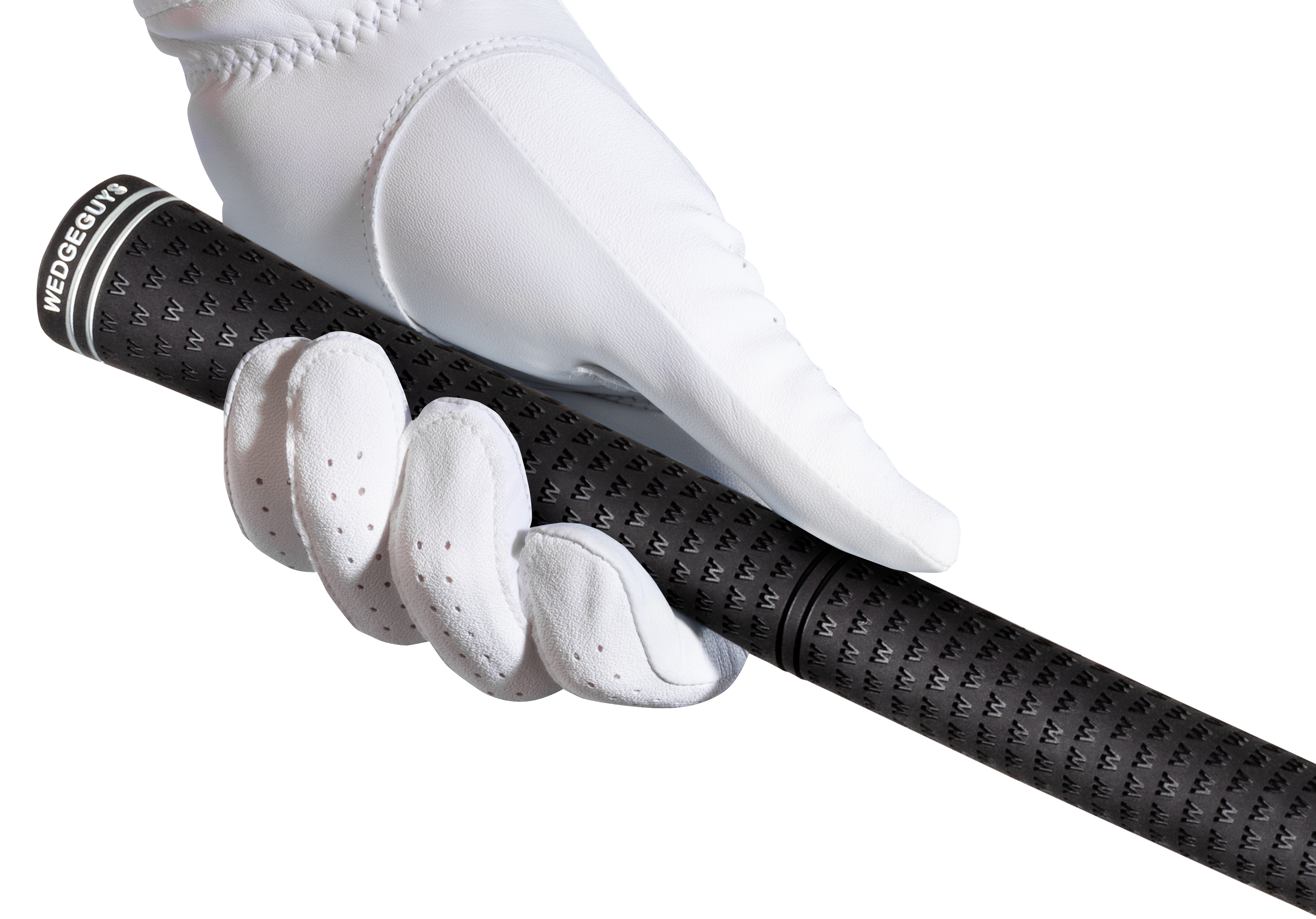
Cord grips are grips that contain a woven fiber material (typically cotton or synthetic cord) fused directly into the rubber compound. The cord fibers create extra surface friction and channel moisture away from the contact area, maintaining traction even when your hands are wet, sweaty, or dealing with humid conditions.
The feel is firm and textured. There's a roughness to the surface that gives strong tactile feedback through the swing. That way, you always know exactly where your hands are on the club.
Most competitive golfers and tour professionals prefer cord or half-cord grips specifically because of this feedback and the reliable all-weather performance.
The trade-off is comfort. Cord grips feel more abrasive on bare hands than rubber, and they require a glove to be comfortable over a full round for most players.
They also cost slightly more than comparable rubber grips, but the durability advantage means they last longer between regrips.
What Are Rubber Golf Grips?
Rubber grips are grips that use a rubber or rubber-blend compound as the primary material, without cord fiber content. They are the most common grip type in golf, and for good reason. Soft, comfortable, and easy on the hands across a full round of play.
In dry conditions, rubber grips provide reliable traction and a comfortable feel that most golfers find natural and forgiving.
Velvet-style rubber grips add a softer surface texture that further reduces abrasiveness, which is ideal for beginners, comfort-focused players, and those with sensitive hands.
The limitation is moisture. Standard rubber becomes slick when exposed to sweat or rain over time, which forces golfers to grip tighter to compensate. That tension is exactly what you don't want in a swing.
For players who sweat heavily or play in wet climates, rubber's comfort advantage fades quickly in the conditions that matter most.
Cord vs Rubber: How Do They Compare?
Cord Grips Win On
-
Traction in wet or humid conditions
-
Moisture channeling- sweat and rain
-
Tactile feedback and feel
-
Long-term durability
-
All-weather consistency
Rubber Grips Win On
-
Comfort and softness in the hand
-
Performance in dry conditions
-
Reduced hand fatigue
-
Beginner-friendliness
-
Lower price point
Feel: Cord grips feel firm and textured. It is responsive, feedback-rich, and precise. Rubber grips feel soft and smooth. They are more comfortable in the hand, but less intense on feedback. Neither is objectively better. It comes down to personal preference and playing style.
Traction: Cord wins clearly. The woven fiber material maintains grip stability even when wet, sweaty, or humid. Rubber grips provide good traction in dry conditions but become less reliable as moisture builds up.
Wet weather performance: Cord grips are specifically engineered for moisture management. The fibers channel sweat and rain away from the contact area rather than letting it pool between your palm and the grip surface. Rubber grips in wet conditions require more grip pressure to stay secure. That extra tension works its way up through the forearms and shoulders.
Comfort: Rubber wins. Softer construction requires less grip pressure and causes less hand fatigue over a full round. Cord grips are comfortable with a glove but can feel abrasive on bare hands, particularly over 18 holes in hot conditions.
Durability: Cord grips last longer. The reinforced construction resists wear from heat, UV exposure, and moisture more effectively than standard rubber. For golfers who play frequently or in tough conditions, cord grips hold their performance longer between regrips.
Who Should Use Cord Grips?
Cord grips are the right choice in specific, well-defined situations. Here's when to go cord:
You sweat heavily during rounds → Cord is the most effective material for moisture management. Nothing else channels sweat away from the grip surface as efficiently.
You play in a humid climate or frequent rain → Cord construction maintains traction in conditions where rubber becomes unreliable.
You prefer firm, feedback-rich feel → The textured surface gives strong tactile feedback that many experienced players actively prefer.
You play competitively or want a tour-preferred feel → The majority of competitive golfers use cord or half-cord grips for consistent performance under pressure.
You play without a glove regularly → Cord grips maintain traction better than rubber without glove protection between the hand and grip.
You want the most durable option → Cord grips last longer and maintain their texture and traction further into their lifespan than rubber alternatives.
Wedge Guys Cord Grips
GLP Cord Grips - Full cord construction with W Traction Control. The cord fibers create extra surface friction that channels moisture away from the grip surface, maintaining a secure hold in humid, rainy, or sweaty conditions. Firm, tour-preferred feel with exceptional durability. Available in standard through jumbo sizing.
Diamond Cord Grips - Cord construction with strategically placed cord patterns for enhanced tactile feedback and control. Moisture-wicking properties built in for all-weather performance. Despite the firm construction, the ergonomic design minimizes hand fatigue, making it a strong choice for players who want cord performance with a slightly more comfortable profile. Available in standard, midsize, and oversize.
Who Should Use Rubber Grips?
Rubber grips are the right starting point for a wide range of golfers. Here's when to go rubber:
You're a beginner → Rubber grips are the most forgiving starting point. They are soft, comfortable, and easy to hold without developing bad grip habits.
You play primarily in dry conditions → Rubber performs well without the rougher cord texture when moisture isn't a factor.
Comfort is your top priority → Rubber requires less grip pressure and causes significantly less hand fatigue across a full round.
You have sensitive hands or mild joint discomfort → Softer rubber construction reduces irritation and pressure on the hands and joints.
You play occasionally → For lower-frequency golfers, rubber grips wear out acceptably, and the comfort advantage outweighs the durability gap compared to cord.
You want the most affordable option → Rubber grips are typically less expensive than comparable cord grips.
Wedge Guys Rubber Grips
GLP Velvet Grips - Velvet-style rubber construction with W Traction Control. Soft, comfortable feel that is noticeably less abrasive than standard rubber. It reduces hand fatigue during long rounds and practice sessions. W Traction Control adds moisture stability that standard rubber grips don't provide. Available in standard through jumbo sizing.
React+ Grips - Rubber wrap construction with DuoWrap side texture, a concave upper traction pattern, and an integrated TrueTrack alignment ridge. The tacky wrap surface holds onto the hand naturally, meaning less squeezing is required to stay secure. The +Profile reduced taper in the lower hand improves stability and promotes consistent hand placement shot after shot, which makes it a strong choice for golfers who want comfort alongside repeatable control. Available in standard, midsize, and oversize.
Cord vs Rubber: Which Lasts Longer?
Cord grips last longer on average. The reinforced construction resists heat, UV exposure, and moisture wear more effectively than standard rubber, which means they hold their texture and traction further into their lifespan.
A cord grip in normal use typically lasts 1.5–2 years. Standard rubber grips average 1–1.5 years. For heavy sweaters or players in humid climates, rubber grips wear faster than average because the constant moisture exposure accelerates the loss of surface tackiness.
Cord grips also give you a clearer signal when they need replacing. Rubber grips become slick before showing visible signs of wear- you may be playing on dead rubber longer than you realize. Cord grips maintain their textured surface more visibly across their lifespan.
Frequently Asked Questions
What is the difference between cord and rubber golf grips?
Cord grips contain a woven fiber material fused into the rubber compound that creates extra surface friction and channels moisture away from the grip surface. Rubber grips use a rubber or rubber-blend compound without cord fiber, providing a softer, more comfortable feel that performs well in dry conditions but becomes less effective in wet or humid weather.
Are cord grips better than rubber grips?
Cord grips are not universally better. They are better for specific situations. Cord grips outperform rubber in wet weather, high-sweat conditions, and for players who prefer firm tactile feedback. Rubber grips outperform cord on comfort, hand fatigue reduction, and suitability for beginners or dry-condition players. The right choice depends entirely on how and where you play.
Do cord grips hurt your hands?
Cord grips feel firmer and more textured than rubber, which can feel abrasive on bare hands during a long round. Most golfers who wear a glove find cord grips perfectly comfortable. Without a glove, the rougher texture can cause some hand irritation, particularly for players with sensitive skin or those new to cord construction.
Are cord grips good for beginners?
Cord grips are generally not recommended for beginners. The firmer feel and rougher texture can make it harder to develop a comfortable, relaxed grip, which is the most important foundation for a beginner golfer. Rubber grips are the better starting point. Cord grips become more relevant as a golfer's game develops and they start playing in more variable conditions.
Bottom Line
Choose cord if: you sweat heavily, play in wet or humid conditions, want tour-preferred feel, or prioritize long-term durability. The GLP Cord Grips and Diamond Cord Grips are both strong starting points with the full cord construction, all-weather performance, and a complete regripping kit included.
Choose rubber if: you're a beginner, play primarily in dry conditions, prioritize comfort, or have sensitive hands. The GLP Velvet Grips and React+ Grips cover the rubber side. They’re soft, comfortable, and built for players who prefer feel over firmness.
For most everyday golfers who play in variable conditions, cord or hybrid construction is the smarter long-term investment. The performance holds up better, the durability is stronger, and the all-weather consistency removes one variable from a game that already has plenty of them.
Leave a comment
This site is protected by hCaptcha and the hCaptcha Privacy Policy and Terms of Service apply.